The Delicate Art of Jade and Jewelry: Essential Techniques for Preservation, Repair, and Authenticity
Jewelry holds more than just aesthetic value; it carries memories, traditions, and often, a significant investment. Whether it’s a family heirloom, a treasured gift, or a personal indulgence, maintaining its beauty and integrity requires knowledge, patience, and the right techniques. Among the most revered and misunderstood gemstones is jade—a symbol of purity, protection, and prosperity. Yet, its allure is matched by its fragility, making proper care and repair essential for preserving its timeless elegance.
The Enigma of Authentic Jade Identification
Jade is one of the most frequently counterfeited gemstones, with imitations ranging from dyed quartz to glass and even plastic. Authentic jade, whether nephrite or jadeite, possesses unique characteristics that set it apart. Nephrite, often found in shades of creamy white to deep green, has a waxy luster and a slightly softer texture compared to jadeite. Jadeite, the more valuable of the two, is prized for its vibrant, translucent green hues and glass-like shine. To distinguish real jade from fakes, start with the touch test: genuine jade feels cool to the touch and warms slowly. A simple scratch test—using a sharp object on an inconspicuous area—can also help; real jade will not scratch easily, while softer imitations will.
For a more scientific approach, use a jeweler’s loupe to inspect the stone’s surface. Authentic jade will have natural inclusions, tiny imperfections that are absent in mass-produced fakes. Another reliable method is the sound test: gently tap the jade with a metal object. Real jade produces a clear, resonant ring, while imitations emit a dull thud. When in doubt, consult a certified gemologist who can perform advanced tests, such as specific gravity measurements or spectroscopic analysis, to confirm authenticity.
Green Jade Care: Preserving Its Luminous Beauty
Jade’s beauty lies in its luminosity, but this can diminish over time if not properly cared for. Unlike diamonds or sapphires, jade is porous and can absorb oils, lotions, and even moisture from the air. To maintain its vibrancy, clean your jade jewelry regularly using a soft, damp cloth and mild soap. Avoid harsh chemicals, ultrasonic cleaners, or steam, as these can damage the stone’s surface or strip away its natural oils. After cleaning, pat the jade dry with a soft towel and allow it to air-dry completely before storing.
When wearing jade, take precautions to protect it from scratches and impacts. Remove jade rings or bracelets before engaging in physical activities, such as gardening, cleaning, or exercising. Exposure to direct sunlight or extreme temperatures can also cause jade to fade or crack, so store it in a cool, dry place away from windows or heat sources. For long-term storage, wrap jade pieces in a soft cloth or place them in a lined jewelry box to prevent contact with other gemstones or metals that could cause abrasions.
Polishing Imperial Jade: Restoring Its Regal Glow
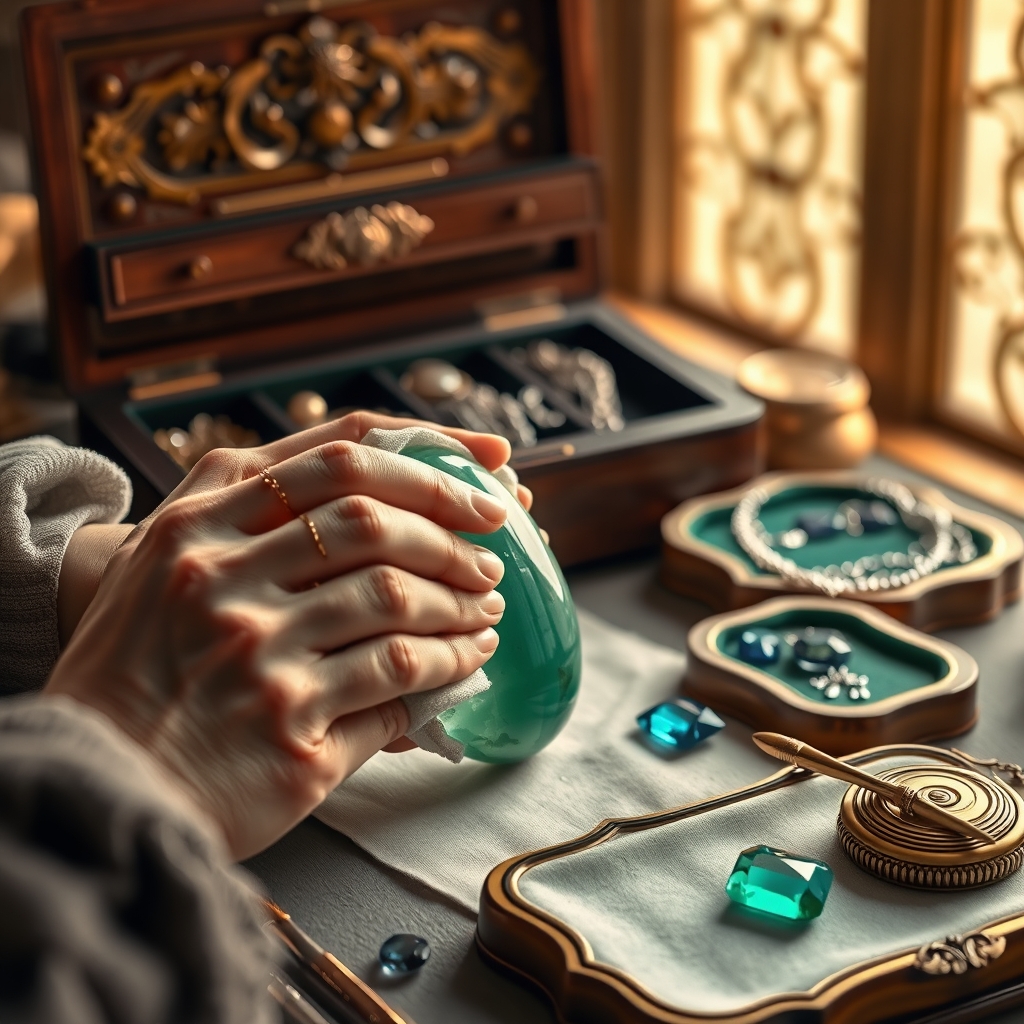
Over time, even the most well-cared-for jade can lose its luster. Polishing imperial jade requires a delicate touch to avoid damaging the stone. Begin by gently cleaning the jade with a soft cloth to remove any surface dirt. For deeper cleaning, use a mixture of warm water and a few drops of mild dish soap, applying it with a soft-bristled toothbrush. Rinse thoroughly and dry with a lint-free cloth.
To restore its shine, use a specialized jade polishing cloth or a small amount of jade polishing powder. Apply the powder sparingly with a soft cloth, using circular motions to buff the surface. Avoid excessive pressure, as this can create micro-scratches. For intricate carvings or hard-to-reach areas, a soft cotton swab can help apply the polish precisely. Once polished, rinse the jade again to remove any residue and dry it thoroughly. Regular polishing, combined with proper storage, will keep your imperial jade looking regal for generations.
Detecting Fake Jade: Red Flags to Watch For
The market is flooded with jade imitations, and some are so convincing that even seasoned collectors can be fooled. One of the most common red flags is an unnaturally vibrant color. While jadeite can exhibit rich greens, colors that appear too bright or uniform are often a sign of dyeing. To test for dye, rub the stone with a white cloth dampened with acetone; if color transfers to the cloth, the jade has been treated.
Another telltale sign is the presence of bubbles or swirls within the stone, which are indicative of glass or resin. Authentic jade will have a consistent texture and weight; if the stone feels unusually light or has a plastic-like appearance, it’s likely a fake. Additionally, be wary of jade sold at suspiciously low prices. High-quality jade, especially imperial jade, commands a premium, and deals that seem too good to be true usually are.
Real Jade Testing: Beyond the Basics
For those who want to go beyond basic tests, several advanced methods can help verify jade’s authenticity. One such method is the refractive index test, which measures how light bends as it passes through the stone. Jadeite has a refractive index of 1.66, while nephrite ranges between 1.60 and 1.64. A gemologist can perform this test using a refractometer, providing a more accurate assessment than visual inspection alone.
Another advanced technique is spectroscopy, which analyzes the stone’s absorption spectrum to identify its chemical composition. Jadeite and nephrite have distinct spectral signatures, making this a reliable way to confirm authenticity. For those without access to professional equipment, purchasing jade from reputable dealers who provide certification is the safest way to ensure you’re getting the real thing.
Securing Loose Gemstones and Repairing Broken Clasps
Loose gemstones and broken clasps are common issues that can turn a beloved piece of jewelry into a source of frustration. For loose gemstones, the first step is to assess the setting. Prong settings are particularly prone to loosening over time, especially if the prongs have worn down or bent. If the gemstone is still secure but wobbles slightly, a jeweler can tighten the prongs by gently bending them back into place. For more severe cases, the prongs may need to be re-tipped or replaced entirely.
Broken clasps are another frequent problem, particularly with necklaces and bracelets. If the clasp is soldered, a jeweler can repair it by re-soldering the broken parts or replacing the clasp altogether. For lobster or spring-ring clasps, the issue may be a worn-out spring or a bent hook. In such cases, replacing the clasp is often the most practical solution. When choosing a new clasp, opt for high-quality materials like sterling silver or gold to ensure durability and longevity.
Strengthening Wire Wraps and Fixing Ring Scratches
Wire-wrapped jewelry is both beautiful and delicate, but over time, the wire can weaken or break. To strengthen wire wraps, start by inspecting the piece for any signs of wear or fatigue. If the wire is thin or brittle, consider reinforcing it with a thicker gauge wire or adding a protective coating, such as clear nail polish, to prevent further damage. For broken wraps, carefully unwind the wire and re-wrap the piece, ensuring the new wire is securely fastened and evenly spaced.
Ring scratches are another common issue, particularly for those who wear their rings daily. To minimize scratches, remove rings before engaging in activities that could damage them, such as washing dishes or working with tools. If scratches do occur, a jeweler can polish the ring to restore its shine. For deeper scratches, re-plating or re-polishing may be necessary. To prevent future scratches, consider applying a thin layer of clear nail polish to the inside of the ring band, which can act as a buffer against everyday wear.
Caring for jade and jewelry is an art that blends science, patience, and a deep appreciation for craftsmanship. Whether you’re verifying the authenticity of a cherished jade piece, restoring an antique heirloom, or simply maintaining the shine of your everyday jewelry, the key lies in understanding the unique needs of each material. By arming yourself with knowledge and adopting a proactive approach to care and repair, you can ensure that your treasures remain as radiant and meaningful as the day they came into your life. The effort you invest today will not only preserve their beauty but also honor the stories and memories they carry, allowing them to be passed down as enduring symbols of love and legacy.