Jade Jewelry Mastery: Proven Techniques for Identification, Care, and Timeless Elegance
Jewelry holds more than just aesthetic value—it carries stories, emotions, and often, a legacy. Among the most revered materials in jewelry is jade, a gemstone celebrated for its beauty, cultural significance, and durability. Yet, owning jade jewelry comes with the responsibility of proper care and maintenance. Whether you’re a collector, a gift recipient, or simply someone who cherishes their pieces, understanding how to identify authentic jade, care for it, and address common jewelry issues is essential to preserving its allure for generations.
The Art of Authentic Jade Identification
Jade is a term that encompasses two distinct minerals: nephrite and jadeite. Jadeite, often referred to as “imperial jade,” is the rarer and more valuable of the two, prized for its vibrant green hues and translucency. Nephrite, while still beautiful, tends to be more opaque and comes in a wider range of colors, including white, gray, and even black. Distinguishing between these types—and identifying fakes—requires a keen eye and a few reliable techniques.
Visual and Tactile Inspection
Authentic jade possesses a unique combination of visual and tactile qualities. Start by examining the stone under natural light. Genuine jadeite often exhibits a slightly granular texture, almost like sugar, which can be felt when running your fingers over the surface. Nephrite, on the other hand, has a smoother, waxy feel. If the piece is polished, look for a subtle play of light within the stone, a characteristic known as “chatoyancy” or the “cat’s eye” effect, which is difficult to replicate in imitations.
Sound Test
One of the oldest methods for testing jade authenticity is the sound test. Gently tap the jade with a small metal object, such as a coin or a ring. Authentic jade produces a clear, resonant ping that lingers slightly, while fake jade or glass imitations will emit a dull, flat sound. This test works because genuine jade has a dense, compact structure that vibrates differently than softer or less dense materials.
Scratch Test
While not recommended for polished or valuable pieces, the scratch test can be useful for raw or unpolished jade. Jade ranks between 6 and 7 on the Mohs hardness scale, meaning it can scratch glass but will not be scratched by a steel knife. If you’re testing a piece you don’t mind potentially damaging, try scratching an inconspicuous area with a sharp object. If the material scratches easily, it’s likely not authentic jade.
Green Jade Care: Preserving Its Natural Beauty
Once you’ve confirmed the authenticity of your jade, the next step is ensuring it remains as stunning as the day you acquired it. Jade is durable, but it’s not indestructible. Proper care involves regular cleaning, mindful storage, and avoiding exposure to harmful substances that can dull its luster or cause discoloration.
Cleaning Your Jade Jewelry
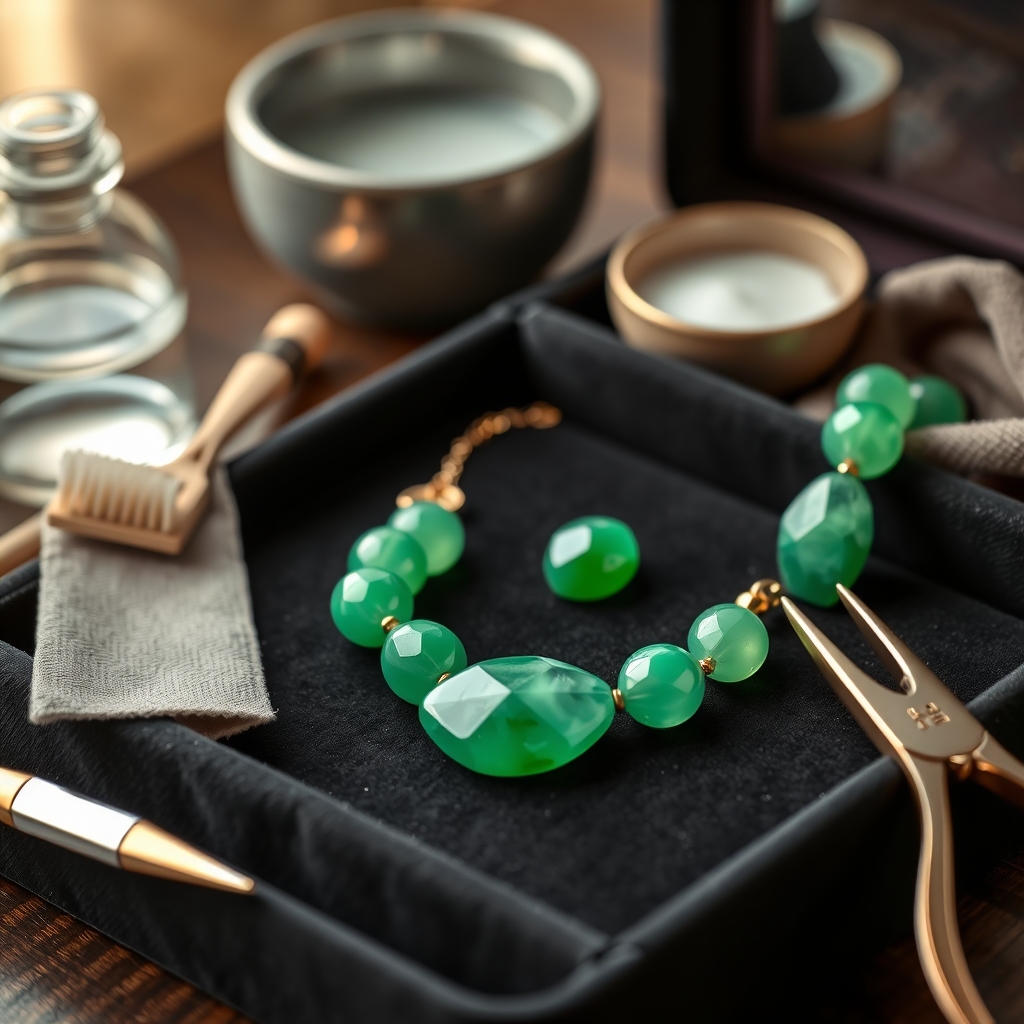
Cleaning jade is a delicate process that requires gentle handling. Start by mixing a small amount of mild dish soap with lukewarm water. Using a soft-bristled toothbrush or a microfiber cloth, gently scrub the surface of the jade to remove dirt and oils. Avoid harsh chemicals, ultrasonic cleaners, or steam cleaning, as these can damage the stone’s surface or weaken any adhesives used in the setting. After cleaning, rinse the jade thoroughly with clean water and pat it dry with a soft cloth.
Preventing Discoloration and Damage
Jade can react to chemicals found in everyday products like lotions, perfumes, and even sweat. To prevent discoloration, always remove your jade jewelry before applying cosmetics, swimming, or engaging in activities that cause excessive sweating. Store your jade pieces separately from other jewelry to avoid scratches, and consider wrapping them in a soft cloth or placing them in a lined jewelry box. For long-term storage, keep jade away from direct sunlight, as prolonged exposure can cause fading or drying out of the stone.
Common Jewelry Repairs: Fixing What’s Broken
Even with the best care, jewelry can sometimes succumb to wear and tear. Loose gemstones, broken clasps, and tangled chains are common issues that, if left unaddressed, can lead to permanent damage. Fortunately, many of these problems can be fixed with a little know-how and the right tools.
Securing Loose Gemstones and Prongs
A loose gemstone is a recipe for disaster, as it can easily fall out and become lost. If you notice a stone wobbling in its setting, take your jewelry to a professional jeweler as soon as possible. In the meantime, avoid wearing the piece to prevent further loosening. For prongs that have become bent or worn, a jeweler can carefully reshape and secure them, ensuring the gemstone remains firmly in place. Attempting to fix prongs yourself can result in scratches or even breakage, so it’s best to leave this task to the experts.
Untangling Fine Chains and Repairing Broken Clasps
Few things are as frustrating as a tangled chain, especially when it’s made of delicate links. To untangle a fine chain, start by laying it flat on a soft surface. Use two straight pins or needles to gently work through the knots, starting from the outermost loops and moving inward. Patience is key—rushing can cause the chain to break. If the clasp is broken, a jeweler can replace it with a new one that matches the original design. For a quick fix, you can use a small jump ring to temporarily secure the chain until you can get it professionally repaired.
Removing Stuck Rings and Fixing Scratches
A ring that won’t budge can be a source of panic, but there are safe ways to remove it without causing injury. Start by lubricating the finger with soap, lotion, or even a bit of cooking oil. Gently twist the ring back and forth while pulling it upward. If the ring still won’t move, try wrapping the finger in plastic wrap before applying more lubricant—this can help reduce swelling and make the ring easier to remove. For scratches on metal bands, a jeweler can polish the surface to restore its shine, though deep scratches may require more extensive refinishing.
Restoring the Shine: Polishing and Maintaining Your Jewelry
Over time, even the most well-cared-for jewelry can lose its luster. Polishing is a simple yet effective way to restore its shine and keep it looking its best. For jade, use a soft polishing cloth to gently buff the surface, removing any surface dullness. Avoid abrasive polishes or rough materials, as these can scratch the stone. For metal components, such as silver or gold, a jewelry polishing cloth can help remove tarnish and bring back the metal’s natural brilliance. Regular polishing not only enhances the appearance of your jewelry but also helps protect it from further damage.
Caring for your jade and jewelry is an investment in their longevity and beauty. By learning to identify authentic jade, adopting proper cleaning and storage habits, and addressing repairs promptly, you ensure that your pieces remain as captivating as the day they came into your life. Whether it’s a cherished heirloom or a new addition to your collection, each piece deserves the attention and care that will allow it to shine for years to come.