The Alchemist’s Guide: Transforming Worn Jewelry and Jade into Radiant Heirlooms
Jewelry and jade are more than mere adornments—they are vessels of memory, craftsmanship, and time. Yet, even the most cherished pieces can succumb to the wear of daily life: tarnished silver, loose gemstones, or jade that has lost its luster. The good news? With a few expert techniques, you can restore their brilliance and ensure they endure for generations. This guide unveils the alchemy of care, repair, and authenticity, turning worn treasures into radiant heirlooms.
The Science of Authentic Jade Identification
Jade’s allure has made it a target for imitations, but discerning real jade from fakes requires more than a keen eye. Start with the touch test: genuine jade feels cool to the touch and warms slowly against your skin. Next, examine its density—real jade is heavier than it appears. For a definitive test, use a jeweler’s loupe to inspect the surface for natural inclusions or a slightly granular texture, hallmarks of authenticity. If you’re still uncertain, a simple scratch test with a steel blade (on an inconspicuous area) can help; real jade won’t scratch easily, while softer imitations will.
For those seeking absolute certainty, consider a professional assessment. Gemologists use tools like refractometers to measure jade’s refractive index or spectrometers to analyze its chemical composition. These methods leave no room for doubt, ensuring your piece is as authentic as its history.
Reviving Tarnished Silver and Cloudy Crystals
Silver’s dark patina and cloudy crystals can dull even the most exquisite jewelry, but restoration is simpler than you think. For tarnished silver, create a gentle cleaning paste using baking soda and water. Apply it with a soft cloth, rubbing in circular motions, then rinse and dry thoroughly. For stubborn tarnish, soak the piece in a mixture of warm water, aluminum foil, baking soda, and salt—the chemical reaction will lift the tarnish without abrasion.
Cloudy crystals, on the other hand, often suffer from buildup or scratches. Soak them in a solution of warm water and mild dish soap, then use a soft-bristled toothbrush to gently scrub away grime. For deeper scratches, a jeweler’s polishing cloth can restore clarity. Avoid harsh chemicals like ammonia or bleach, as they can damage the crystal’s surface and strip away its natural brilliance.
Securing Loose Gemstones and Strengthening Prongs
A loose gemstone is a heart-stopping moment for any jewelry owner, but it doesn’t have to spell disaster. If the stone is simply wobbling in its setting, a jeweler can often tighten the prongs with specialized tools. For a temporary fix at home, use a toothpick to apply a tiny dab of clear nail polish around the base of the stone—this can provide a short-term hold until professional help is available.
Prongs, the tiny metal claws that secure gemstones, can wear down over time. Inspect them regularly for signs of thinning or bending. If you notice damage, take the piece to a jeweler immediately. They can re-tip or replace prongs, ensuring your gemstones remain secure. For wire-wrapped jewelry, check the wraps for looseness and gently tighten them with pliers, taking care not to over-tighten and risk snapping the wire.
Untangling Fine Chains Without the Frustration
Fine chains are notorious for tangling, but patience and the right technique can save you from a knotted nightmare. Lay the chain flat on a soft surface and use two straight pins to gently tease apart the knots. Start from the outermost loops and work inward, avoiding any pulling or tugging that could weaken the metal. For stubborn tangles, a drop of baby oil or mineral oil can lubricate the chains, making them easier to separate.
Prevention is key: store chains individually in soft pouches or hang them on a jewelry organizer to minimize tangling. If a clasp breaks, don’t despair. Many clasps can be replaced with a matching style, and a jeweler can often perform the repair while you wait.
Polishing Imperial Jade to Its Former Glory
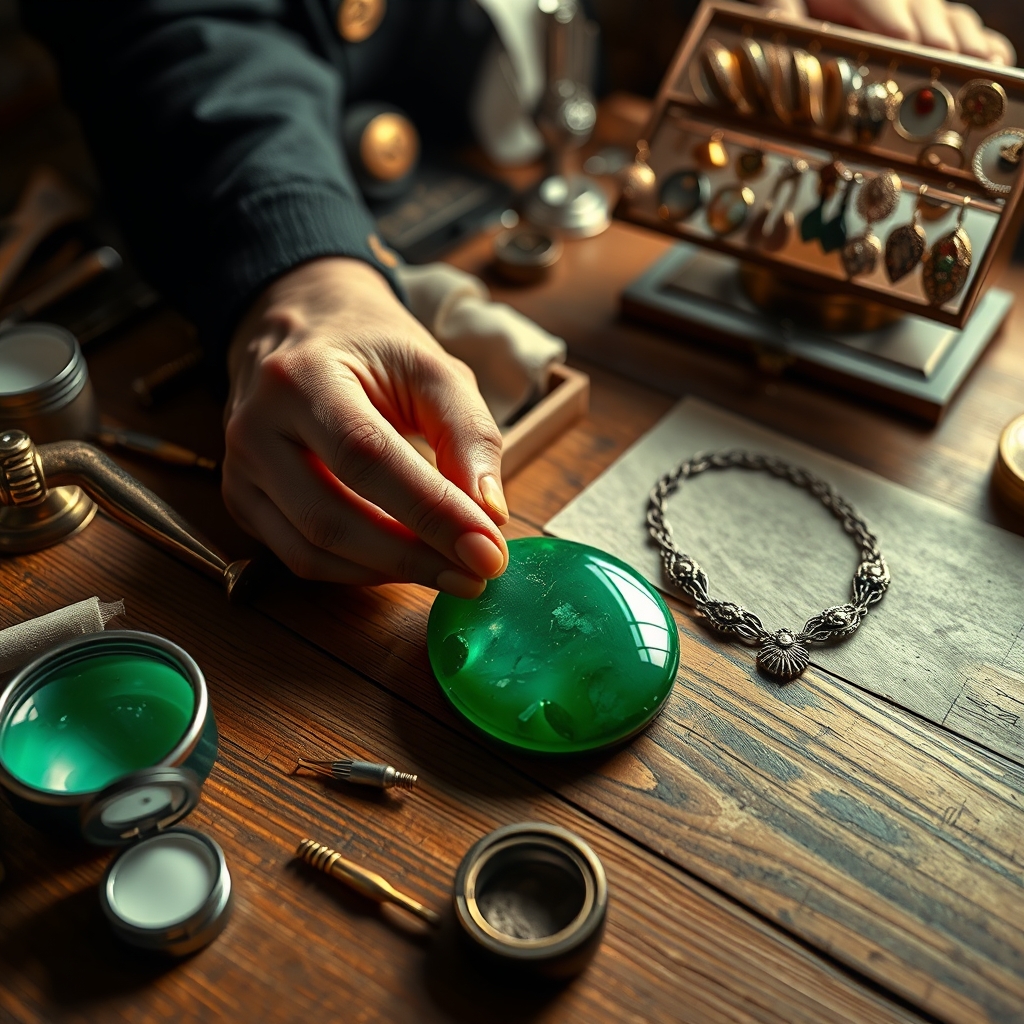
Imperial jade, with its rich green hue, is a treasure that demands careful polishing. Start by cleaning the piece with a soft, damp cloth to remove surface dirt. For deeper cleaning, use a mild soap solution and a soft brush, taking care to avoid harsh scrubbing that could scratch the surface. To restore its luster, apply a small amount of jade-specific polishing cream with a soft cloth, buffing in gentle, circular motions.
Avoid ultrasonic cleaners or steam cleaners, as the heat and vibrations can damage jade’s delicate structure. Instead, opt for a soft polishing cloth designed for gemstones. If your jade has developed a dull patina over time, consider a professional polishing service—they have the tools and expertise to restore its brilliance without risking damage.
Preventing Discoloration and Storing Jade Safely
Jade’s vibrant color can fade or discolor if exposed to harsh chemicals, sunlight, or extreme temperatures. Store your jade pieces in a cool, dark place, away from direct sunlight and humidity. A lined jewelry box or a soft pouch works well, but avoid plastic bags, which can trap moisture and lead to tarnishing or discoloration.
When wearing jade, remove it before swimming, showering, or applying lotions and perfumes. These substances can leave residues that dull the stone’s surface over time. For added protection, wipe your jade with a soft, dry cloth after each wear to remove oils and debris.
Restoring Antique Jewelry with Care
Antique jewelry carries the weight of history, and restoring it requires a delicate touch. Start by assessing the piece’s condition—look for signs of wear, loose stones, or damaged settings. For minor repairs, such as reattaching an earring post or tightening a loose clasp, a jeweler can often perform the work without compromising the piece’s integrity.
For more extensive restorations, such as repairing broken filigree or replacing missing stones, seek out a jeweler who specializes in antique pieces. They can match the original craftsmanship and materials, ensuring the restoration honors the jewelry’s heritage. Always avoid modern adhesives or soldering techniques, as they can damage delicate antique metals and gemstones.
Every piece of jewelry and jade holds a story, and with the right care, that story can continue for generations. Whether it’s reviving tarnished silver, securing a loose gemstone, or polishing imperial jade, the key lies in patience, knowledge, and a deep respect for the craftsmanship. By mastering these techniques, you’re not just preserving jewelry—you’re safeguarding the memories and moments they represent, ensuring they shine as brightly as the day they were first cherished.