The Gilded Atelier: How Bespoke Jewelry Salons Are Redefining the Art of Personal Luxury
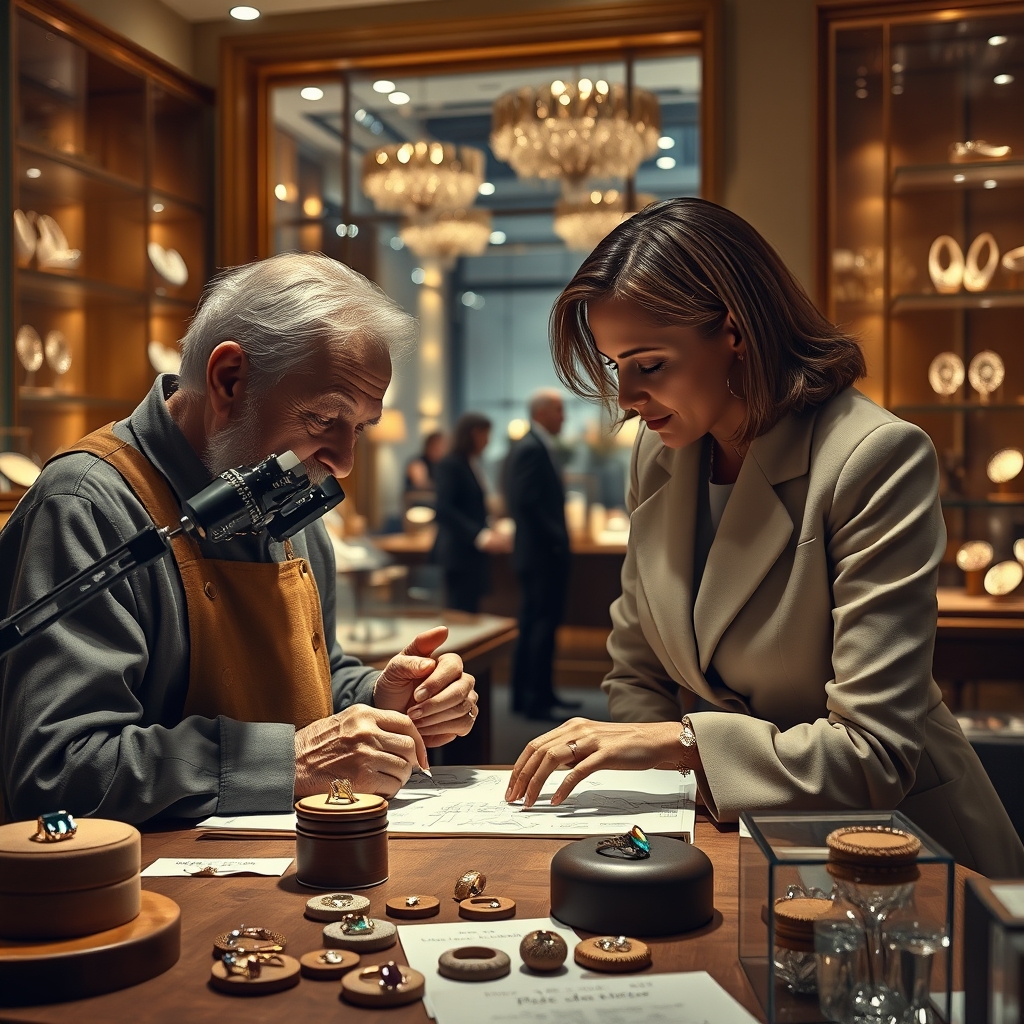
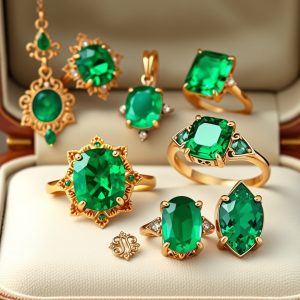
In the rarefied world of high jewelry, where every curve of a gemstone and every whisper of metal tells a story, bespoke salons have emerged as the sanctuaries of true individuality. These are not merely spaces where jewelry is displayed; they are ateliers where dreams are meticulously crafted into wearable art. The rise of bespoke jewelry salons at elite exhibitions like the Fine Jewelry Pavilion and Couture Jewelry Presentation signals a shift in the luxury landscape—one where personal narrative takes precedence over mass-produced opulence. Here, the client is not just a patron but a collaborator, co-creating pieces that transcend trends to become heirlooms of emotional resonance.
The Alchemy of Collaboration
At the heart of every bespoke jewelry salon lies the alchemy of collaboration. Master goldsmiths, gemologists, and designers work in tandem with clients, transforming abstract desires into tangible masterpieces. Unlike traditional retail experiences, where choices are limited to pre-designed collections, bespoke salons offer a blank canvas. A client might arrive with a sketch of a long-lost family heirloom, a favorite poem, or even a memory of a place that holds deep significance. The artisan’s role is to interpret these fragments of inspiration, weaving them into a design that feels both timeless and deeply personal.
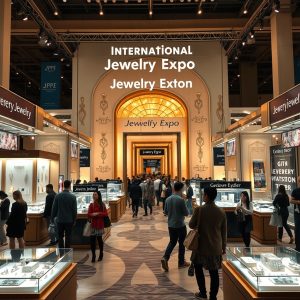
Take, for instance, the Bespoke Jewelry Salon at the International Jewelry Expo, where a client once commissioned a necklace inspired by the Northern Lights. The designer sourced rare alexandrite stones, which shift from green to purple under different lights, to mimic the ethereal dance of the aurora. The piece was not just a necklace; it was a wearable memory, a testament to the power of collaboration between artist and patron. Such experiences redefine luxury not as something owned, but as something experienced—a journey of creation that begins with a conversation and ends with a piece that feels like an extension of the self.
The Craftsmanship Behind the Curtain
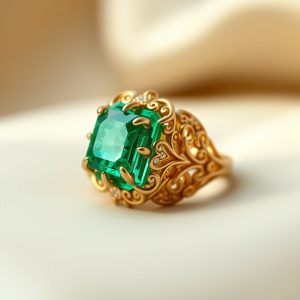
What sets bespoke jewelry apart is the unparalleled craftsmanship that goes into each piece. At exhibitions like the Master Goldsmith Showcase, artisans demonstrate techniques that have been honed over centuries, from hand-engraving to granulation, where tiny gold beads are fused onto a surface to create intricate patterns. These methods are not just about aesthetics; they are a celebration of human skill in an age of automation. A single bespoke ring can take hundreds of hours to complete, with each detail—from the setting of the stone to the finish of the metal—executed with precision that machines cannot replicate.
One of the most captivating aspects of these salons is the transparency they offer. Clients are often invited into the workshop to witness the process firsthand, from the initial wax model to the final polishing. This behind-the-scenes access demystifies the art of jewelry-making, fostering a deeper appreciation for the craft. It also ensures that the client remains an active participant in the creation, able to request adjustments or refinements at every stage. The result is a piece that is not just custom-made but co-authored, imbued with the client’s vision and the artisan’s expertise.
The Ethical Dimension: Sustainability and Storytelling
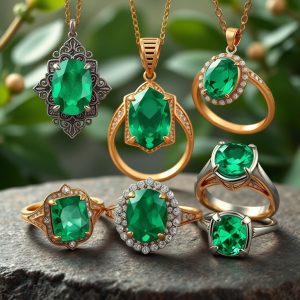
In an era where consumers are increasingly conscious of the ethical implications of their purchases, bespoke jewelry salons are leading the charge in sustainable luxury. Many of these ateliers prioritize responsibly sourced gemstones and recycled metals, ensuring that each piece has a minimal environmental footprint. At the Sustainable Jewelry Pavilion, for example, designers showcase collections made from reclaimed gold and lab-grown diamonds, proving that sustainability and opulence are not mutually exclusive.
Beyond materials, bespoke jewelry is also about storytelling. Each piece carries a narrative—whether it’s the journey of a rare sapphire from a mine in Sri Lanka or the hours of labor that went into crafting a one-of-a-kind setting. These stories resonate with clients who seek more than just adornment; they want pieces that reflect their values, their histories, and their aspirations. In a world where fast fashion and disposable luxury dominate, bespoke jewelry stands as a rebellion, a return to the idea that true luxury is meaningful.
The Future of Bespoke: Technology Meets Tradition
While bespoke jewelry is rooted in tradition, it is not immune to the innovations of the digital age. Many salons now incorporate 3D printing and CAD (Computer-Aided Design) to create prototypes, allowing clients to visualize their pieces before they are brought to life. This fusion of technology and craftsmanship enhances the bespoke experience, making it more accessible without compromising on artistry. At the Avant-Garde Jewelry Exhibit, designers are even experimenting with augmented reality, enabling clients to “try on” virtual versions of their custom pieces before committing to the final design.
Yet, for all its technological advancements, the soul of bespoke jewelry remains firmly anchored in human connection. The best salons understand that no amount of digital precision can replace the intimacy of a face-to-face consultation, the tactile joy of holding a handcrafted piece, or the emotional weight of a design that has been months in the making. Technology may streamline the process, but it is the human touch—the artisan’s eye, the client’s vision—that transforms a piece of jewelry into a legacy.
As the world of luxury continues to evolve, bespoke jewelry salons stand as a testament to the enduring allure of the personal and the unique. They remind us that true luxury is not about the price tag or the brand name, but about the stories we choose to wear. In a sea of mass-produced adornments, these salons offer something rare: the chance to own a piece of art that is as singular as the person who wears it. And perhaps, in that singularity, lies the future of luxury itself—a future where every jewel is not just seen, but felt.