The Ethereal Fusion: How Modernist Jewelry Galleries Are Bridging Past and Future in Adornment
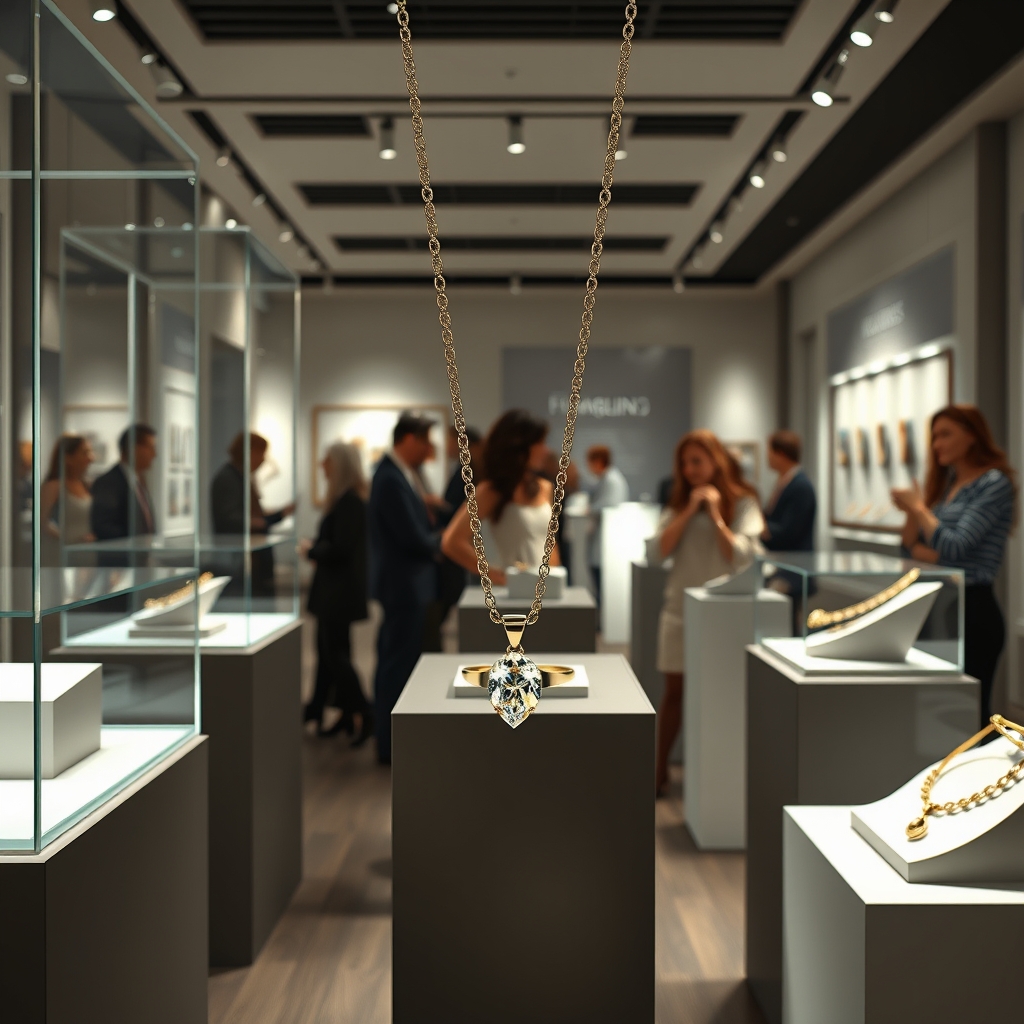
The world of fine jewelry has long been a realm where artistry, history, and innovation converge. Among the most captivating spaces in this universe are the Modernist Jewelry Galleries, where the boundaries of tradition and avant-garde design dissolve into a seamless tapestry of creativity. These galleries are not merely exhibitions; they are sanctuaries where the soul of jewelry is reimagined, where each piece tells a story that transcends time. Here, the past is not discarded but reinterpreted, and the future is not just anticipated—it is crafted with meticulous precision and boundless imagination.
The Renaissance of Modernist Jewelry
Modernist jewelry emerged as a movement in the early 20th century, a rebellion against the ornate and often rigid designs of the Victorian and Edwardian eras. Pioneers like René Lalique, Georges Fouquet, and later, artists from the Bauhaus school, sought to strip jewelry of its excessive embellishments and instead focus on form, function, and the intrinsic beauty of materials. Today, Modernist Jewelry Galleries are experiencing a renaissance, drawing inspiration from these early visionaries while pushing the envelope further with contemporary techniques and materials.
What sets these galleries apart is their ability to blend the minimalism of modern design with the emotional depth of historical craftsmanship. A necklace might feature a sleek, geometric pendant, yet the metalwork could be hand-forged using centuries-old techniques. This juxtaposition creates a dialogue between eras, inviting viewers to appreciate the evolution of jewelry as both an art form and a cultural artifact.
The Alchemy of Materials and Techniques
One of the most fascinating aspects of modernist jewelry is its fearless experimentation with materials. While gold, platinum, and diamonds remain staples, designers are increasingly incorporating unconventional elements such as titanium, meteorite fragments, recycled plastics, and even 3D-printed components. These materials are not chosen arbitrarily; they are selected for their ability to challenge perceptions and elevate the narrative of each piece.
For instance, at a recent Fine Jewelry Pavilion, a designer showcased a collection where traditional gemstones were paired with lab-grown diamonds and ethically sourced sapphires. The result was a stunning visual harmony that spoke to both the luxury of the past and the sustainability of the future. Techniques like laser cutting, electroforming, and computer-aided design (CAD) are also being employed to create intricate patterns and structures that would have been impossible to achieve by hand alone. Yet, these technological advancements are often balanced with hand-finishing touches, ensuring that each piece retains a sense of human connection.
The Role of Galleries in Shaping Trends
Modernist Jewelry Galleries are more than just display spaces; they are incubators for trends that ripple across the entire industry. By curating collections that challenge conventional notions of beauty and value, these galleries influence everything from high-street fashion to haute couture. A single exhibition can spark a global movement, whether it’s the resurgence of Art Deco-inspired designs or the adoption of bold, asymmetrical forms that defy traditional symmetry.
These galleries also serve as a platform for emerging talent. The Emerging Designer Gallery sections at major exhibitions like the Global Gem Show or the International Jewelry Expo are where the next generation of jewelry artists gain visibility. Here, young designers experiment with themes of identity, sustainability, and technology, often blending cultural heritage with futuristic aesthetics. Their work not only enriches the gallery experience but also ensures that the art of jewelry remains dynamic and ever-evolving.
The Intersection of Art and Wearability
A common misconception about modernist jewelry is that its avant-garde designs sacrifice wearability for artistic expression. However, the most successful pieces in these galleries strike a delicate balance between the two. A brooch might resemble a miniature sculpture, yet its construction ensures it sits comfortably on fabric. A ring could feature an abstract, asymmetrical design, but its ergonomics make it a joy to wear.
This harmony between art and functionality is what makes modernist jewelry so compelling. It challenges wearers to see jewelry not just as an accessory, but as an extension of their identity. Whether it’s a bold statement piece or a subtle, understated design, modernist jewelry invites individuals to express themselves in ways that traditional jewelry often cannot.
The Future of Modernist Jewelry Galleries
As the world becomes increasingly digital, Modernist Jewelry Galleries are finding new ways to engage audiences. Virtual exhibitions, augmented reality (AR) try-ons, and interactive online catalogs are becoming standard features, allowing collectors and enthusiasts to explore collections from anywhere in the world. These innovations are not replacing the physical gallery experience but enhancing it, making it more accessible and immersive.
Sustainability is another driving force shaping the future of these galleries. With growing awareness of the environmental and ethical implications of mining and manufacturing, designers and curators are prioritizing eco-friendly practices. From sourcing recycled metals to partnering with fair-trade gemstone suppliers, the industry is undergoing a transformation that aligns with the values of modern consumers. The Sustainable Jewelry Pavilion at recent expos has become a hub for these initiatives, showcasing how luxury and responsibility can coexist.
In the heart of these galleries, where the past and future collide, there is a sense of magic—a belief that jewelry is not just about adornment but about storytelling, identity, and connection. Each piece, whether a delicate ring or a bold cuff, carries with it the whispers of history and the promise of innovation. It is this duality that makes modernist jewelry galleries not just a destination for collectors, but a pilgrimage for anyone who believes in the transformative power of art. As the boundaries of design continue to expand, these spaces will remain at the forefront, illuminating the path forward with every gleam and sparkle.