The Hidden Craft of Jade and Jewelry: Unveiling Authentic Care, Repair, and Longevity Secrets
Jewelry holds more than just aesthetic value—it carries stories, emotions, and often, a legacy. Yet, the beauty of these treasures can fade if not cared for properly. Whether it’s the deep allure of authentic jade or the delicate sparkle of a silver necklace, understanding how to maintain, repair, and identify these pieces ensures they remain as captivating as the day they were acquired. The key lies not just in knowing what to do, but in mastering the subtle art of preservation.
The Delicate Art of Authentic Jade Identification
Jade, with its mesmerizing hues and cultural significance, is one of the most sought-after gemstones. However, the market is flooded with imitations that can deceive even the most discerning eye. Authentic jade—whether nephrite or jadeite—possesses unique characteristics that set it apart. Start by examining its texture; real jade is cool to the touch and has a smooth, almost waxy feel. Its weight is another telltale sign—genuine jade is denser and heavier than most fakes. A simple scratch test can also help; authentic jade will not scratch easily, while softer imitations will show marks.
For a more scientific approach, consider using a refractometer to measure the stone’s refractive index. Jadeite typically ranges between 1.66 and 1.68, while nephrite falls slightly lower. If you’re still uncertain, consulting a gemologist or using a UV light can reveal fluorescence patterns unique to real jade. The effort to verify authenticity is worth it, as nothing compares to the timeless elegance of a genuine piece.
Preserving the Luster: Green Jade Care Essentials
Once you’ve confirmed the authenticity of your jade, the next step is ensuring its longevity. Green jade, in particular, requires gentle yet consistent care to maintain its vibrant color and smooth surface. Avoid exposing it to harsh chemicals, such as chlorine or household cleaners, which can erode its natural luster. Instead, clean it with a soft, damp cloth and mild soap, ensuring you rinse it thoroughly to remove any residue. For deeper cleaning, a solution of warm water and a few drops of dish soap can be used, but always dry it immediately with a lint-free cloth.
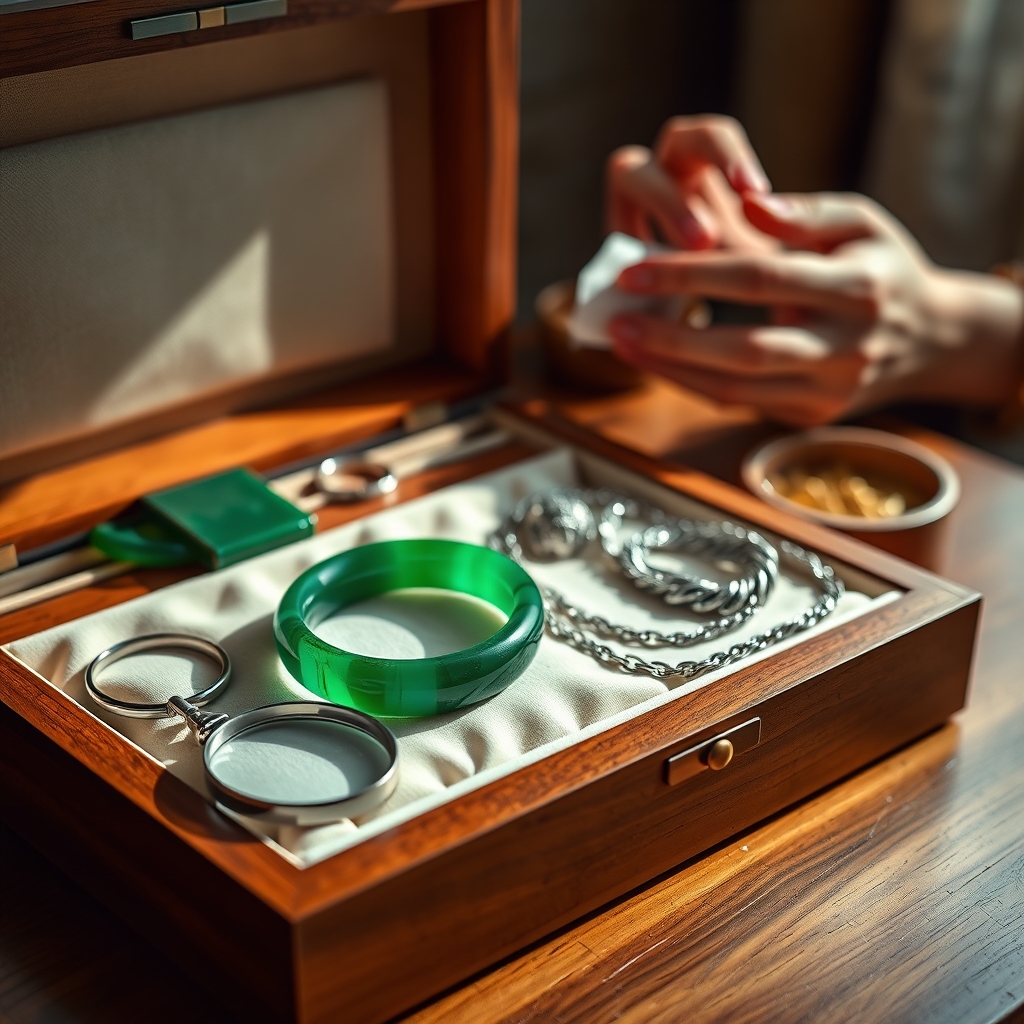
Storage is equally critical. Jade should be kept separate from other jewelry to prevent scratches, ideally in a soft pouch or a lined jewelry box. Prolonged exposure to sunlight can cause discoloration, so store it in a cool, dark place. If your jade piece is set in metal, such as silver or gold, be mindful of tarnish, which can transfer onto the stone. Regular polishing of the metal components will help preserve the overall brilliance of the piece.
Polishing Imperial Jade: Restoring Its Regal Glow
Imperial jade, known for its rich, emerald-green hue, is especially prized and requires meticulous care to retain its regal appearance. Over time, even the most well-maintained jade can lose its shine due to natural wear. To restore its glow, start by gently polishing it with a soft, dry cloth. For more stubborn dullness, a small amount of jade-specific polishing powder can be used, but avoid abrasive materials that could damage the surface.
If your imperial jade is part of a larger piece, such as a bracelet or pendant, take extra care with the metal settings. Use a jewelry polishing cloth to buff the metal, ensuring it complements the stone’s brilliance. For intricate designs, a soft-bristled toothbrush can help reach crevices without causing harm. The goal is to enhance, not alter, the natural beauty of the jade, allowing its inherent elegance to shine through.
Reviving Tarnished Silver and Loose Gemstones
Silver jewelry, while stunning, is prone to tarnishing due to its reaction with sulfur in the air. The good news is that restoring its shine is simpler than you might think. A mixture of baking soda and water can create a gentle paste that, when applied with a soft cloth, lifts tarnish without scratching the metal. For more stubborn tarnish, a dip in a solution of warm water, aluminum foil, baking soda, and salt can work wonders—just be sure to rinse and dry the piece thoroughly afterward.
Loose gemstones, on the other hand, can be a sign of wear or poor craftsmanship. If you notice a gemstone wobbling in its setting, it’s essential to address it promptly to prevent loss. A jeweler can secure it by tightening the prongs or re-setting the stone, but for minor adjustments, a small dab of clear nail polish can provide a temporary fix. However, this is not a long-term solution, and professional repair is always recommended to ensure the stone’s security.
Untangling Fine Chains and Repairing Broken Clasps
Few things are as frustrating as a tangled chain or a broken clasp. For fine chains, patience is key. Lay the chain flat on a surface and use a straight pin or needle to gently tease apart the knots. Avoid pulling, as this can weaken the links. If the chain is severely tangled, a drop of baby oil or lubricant can help loosen the knots without damaging the metal.
Broken clasps, while disheartening, are often repairable. If the clasp is simply loose, a jeweler can tighten or replace it. For a quick fix at home, a small jump ring or lobster clasp can be attached temporarily, but this should not replace professional repair. Investing in high-quality clasps, such as spring rings or box clasps, can also prevent future breakages, ensuring your jewelry remains secure and wearable for years to come.
Detecting Fake Jade and Testing Real Jade
The rise of synthetic and treated jade has made identification more challenging, but not impossible. One of the most reliable methods is the scratch test—real jade will not scratch easily, while imitations like glass or plastic will. Another technique is the sound test; when tapped gently, authentic jade produces a clear, resonant sound, whereas fakes tend to sound dull or flat. For those willing to invest in tools, a hardness tester can confirm jade’s durability, as it ranks between 6 and 7 on the Mohs scale.
If you’re still unsure, consider the price. Authentic jade, especially imperial jade, commands a high value, so if a deal seems too good to be true, it likely is. When in doubt, seek the expertise of a certified gemologist who can provide a definitive assessment. Knowing the difference between real and fake jade not only protects your investment but also ensures you’re cherishing a piece of genuine craftsmanship.
Caring for jewelry is more than a routine—it’s a commitment to preserving the stories and emotions embedded in each piece. Whether it’s the deep green of authentic jade, the cool elegance of silver, or the sparkle of a well-set gemstone, these treasures deserve attention and respect. By mastering the techniques of identification, cleaning, and repair, you’re not just maintaining their beauty; you’re ensuring they continue to captivate and inspire for generations to come. The true value of jewelry lies not in its material worth, but in the memories and meaning it holds, and with the right care, that value will never fade.